The Shear Punch test
Gaharia, David - LabMind. Kalén, Rikard - SGI. Hov, Sølve - NGI
ICSMGE 2026, Vienna, Austria

The Test Procedure
The principles of the test are the following: a clay specimen with 50 mm diameter and 15 mm height is placed in a sample ring and positioned on a bottom plate with a punch centred. On top of the ring a top plate is placed. The centre of the top plate has circular opening corresponding to the diameter of the punch (30 mm). When the punch is forced into the specimen a cylindrical failure surface is created, i.e., the soil sample fails by punching shear.
The punch is pushed into the sample using a displacement rate of 0.80 mm per minute, resulting in a stress-strain response similar to other shear testing methods.
Why use the shear punch test?
The test is meant to replace unreliable index tests for the shear strength of clays, such as the fall cone test. The shear punch test...
1) ...is quick, execution time is below 15 minutes from specimen preparation to equipment cleaning.
2) ...is suitable for soft clays with undrained shear strength starting from ∼5 kPa. The method has also been used for cement stabilized clays with shear strengths up to 200 kPa.
3) ...is cheap to perform, making it a viable alternative to replace index tests.
4) ...has good correlations with the Direct Simple Shear test.
5) ...uses equipment compatible with most standard laboratory load frames.
Correlation & validation
The undrained shear strength of a clay can be easily calculated from the maximum shear stress measured during the test. Over 200 parallell tests of natural Swedish clays were perform in both for the shear punch test and the direct simple shear (DSS) test for validation by two separate laboratories - the Swedish Geotechnical Institute and LabMind. The combined data of the laboratories showes a correlation of:
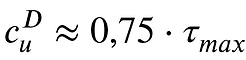
If the OCR is known then the following correlation can be used instead (based on new data, not in the conference paper):

The Equipment

a) top plate with circular opening
b) sample ring
c) bottom plate
d) punch

Manufacturing cost about €5 000. The equipment is designed to be used in a uniaxial load frame where the punching force is measured by a conventional load cell.

Contact information
David Gaharia, Laboratory manager of LabMind, the leading geotechnical laboratory in Stockholm, Sweden.
Reach me at david.gaharia@labmind.se
or www.linkedin.com/in/gaharia
Co-author Rikard Kalén at Swedish Geotechnical Institute can be reached at rikard.kalen@sgi.se for more information on the development of the test.
